

Table of Contents
- Where to Buy High Quality Fabric: What Actually Matters
- How to Choose Quality Fabric Before You Spend a Dollar
- High-Quality Fabric by the Yard: What Fair Pricing Looks Like
- Fabric Samples by Mail: The Safest Way to Shop Online
- Online Apparel Fabric Stores: Matching the Store to Your Project
- How to Buy High Quality Fabric Online With Less Risk
- Frequently Asked Questions
Last Updated: October 22, 2026
Where to Buy High Quality Fabric: What Actually Matters
The best place to buy high quality fabric is an online store that publishes fiber content, fabric weight, and true-to-life color photos, then backs that information with a sample program and a clear return policy.
Here is the part most guides get wrong: they rank stores by selection size. A store with ten thousand bolts tells you nothing about whether the cotton you receive will fray, shrink, or match your screen. Quality fabric is a specification question, not a catalog-size question.
How to Choose Quality Fabric Before You Spend a Dollar
Learning how to choose quality fabric comes down to reading the listing like a spec sheet, not a mood board. Fiber content, weight, thread count, and manufacturer reputation tell you more than any product photo. A common mistake is buying on pattern appeal alone, then discovering the fabric is too stiff for a quilt or too thin for a garment.
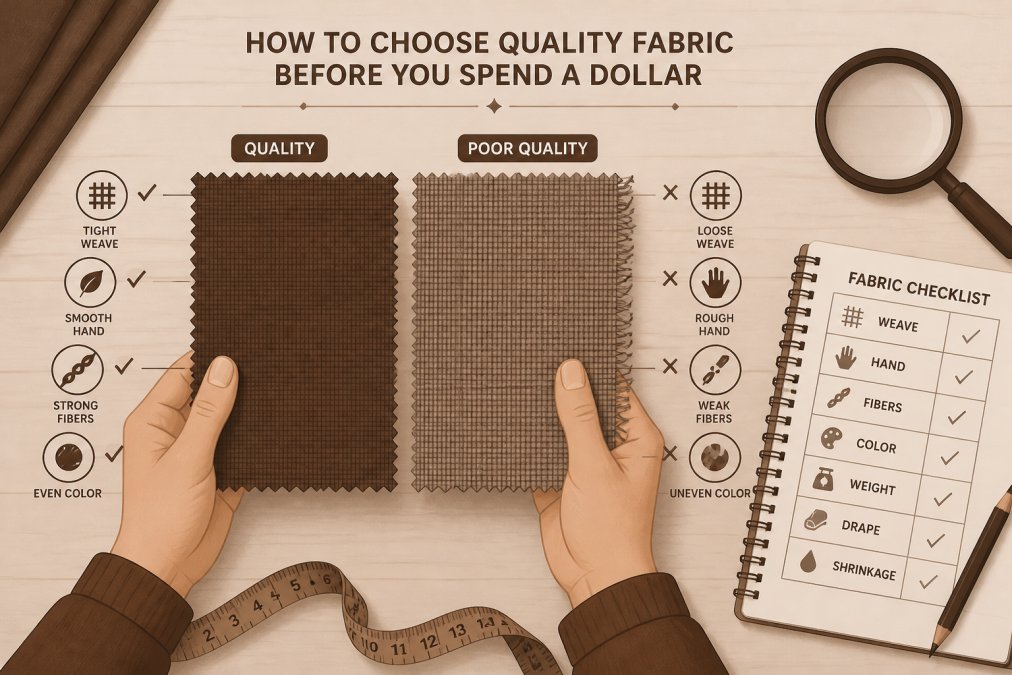
The Five-Point Fabric Quality Checklist
Use this checklist before you add anything to a cart:
- Fiber content is stated in percentages. "100% cotton" on the listing beats a vague "cotton blend."
- Weight or width is listed. Quilting cotton is usually about 43 to 45 inches wide; upholstery fabric is heavier and wider. If width is missing, ask.
- Manufacturer and designer are named. Named mills such as Moda, Andover, and Ruby Star Society publish collections you can look up and cross-reference.
- Color is shown under neutral lighting, ideally with more than one photo of the same print.
- Care instructions are included. If a seller cannot tell you how the fabric washes, that is a warning.
High-Quality Fabric by the Yard: What Fair Pricing Looks Like
Pricing for high-quality fabric by the yard should be transparent per unit, with clear cut policies and no hidden minimums. At Mooser Fabric Outlet, quilting-weight cotton prints from Ruby Star Society and Moda start at $7.00, and we sell by the half yard, cutting continuously when you buy multiples. Solids such as Confetti Cotton start at $4.00.

That per-unit transparency matters more than the headline number. A store quoting a low price per yard but cutting in odd increments, or charging restocking fees on returns, costs you more in the end. Compare the price per yard, the cut policy, and the return terms together.
How to Compare Total Cost Across Sellers
The advertised price per yard is only one line in the real cost of a fabric order. A fair comparison adds up five things:
- Price per yard at the cut size you actually need. A store that only sells full yards can cost more than one that sells half yards when your pattern calls for 1.5 yards.
- Minimum order quantity. Some sellers require a minimum cut or a minimum order value; others do not. A low price with a high minimum is not a low price for a small project.
- Shipping cost and speed. Flat-rate shipping can be cheaper for a large order and more expensive for a single swatch. Factor shipping into the per-yard cost for the order size you are actually placing.
- Sample policy. A store that sells or sends swatches cheaply saves you from a costly mistake later. A store with no sample option shifts that risk onto you.
- Return terms on cut fabric. Most sellers cannot accept returns on cut yardage, so the return policy matters most for uncut items and for order errors. Read it before you cut.
A common pattern among experienced buyers is to calculate a "landed cost per yard", price plus shipping divided by usable yards, before comparing two sellers. It is a simple habit that exposes stores whose low headline price disappears once shipping and minimums are added.
Precuts vs. Yardage: A Real Cost Comparison
Precuts save cutting time; yardage saves money per square inch when you need volume. Here is how the options compare:
| Option | What You Get | Price | Best For |
|---|---|---|---|
| 5" square pack (42 cuts) | 42 squares, 5" x 5" | $14.00 | Charm quilts, scrappy projects |
| 10" square pack (42 cuts) | 42 squares, 10" x 10" | $49.00 | Layer cakes, larger blocks |
| Fat quarter bundle (24 cuts) | 24 pieces, approx. 18" x 22" | $85.00 | Sampler quilts, coordinated palettes |
| Yardage (half-yard cuts) | Continuous cut, 43"-45" wide | From $4.00 to $9.00 | Borders, backing, garments, repeat yardage |
Fabric Samples by Mail: The Safest Way to Shop Online
Fabric samples by mail remove the single biggest risk in online fabric shopping: color and hand-feel surprises. Ordering swatches before committing to yardage costs little and prevents expensive mistakes on heirloom projects. Many stores let you evaluate a collection before you buy the full bundle.
When you receive swatches, check three things in daylight: color accuracy against your screen, drape and stiffness, and whether the print repeats cleanly. A swatch also tells you how the fabric frays at the cut edge, which hints at how it will behave once washed.
Online Apparel Fabric Stores: Matching the Store to Your Project
The right online fabric store depends on what you are making, not on which store ranks first. Quilting cotton behaves differently from apparel fabric, and upholstery fabric has different durability needs again. Match the store's specialty to your project before you compare prices.
Sparrow Falls by Michael Nardi Fat Quarter Bundle - 24 Cuts →
A useful way to think about it: every fabric purchase is a trade-off between hand-feel, durability, drape, and care. A store that specializes in one category usually publishes the specifications that matter for that category, a quilting shop lists width and precut counts, an apparel shop lists stretch percentage and pre-shrinking, an upholstery shop lists abrasion ratings and backing.
Quilting, Home Décor, and Garments: Where Each Fabric Fits
- Quilting: Look for 100% cotton quilting-weight prints and precuts from named manufacturers. Collections such as Sparrow Falls by Michael Nardi, sold as a 24-cut fat quarter bundle or 42-cut square packs, give you a coordinated palette without hunting for matches. The trade-off: quilting cotton is stable and easy to piece but has little drape, so it is a poor choice for flowing garments.
- Home décor: Heavier cottons and canvas-weight fabrics suit pillows and light upholstery. Check width and weight before ordering; drapery fabric needs more yardage than you expect because of pattern repeat and hem allowances. The trade-off: heavier fabrics are more durable but harder to sew on a standard machine and slower to wash and dry.
- Garments: Apparel fabric needs drape, stretch, and care information. Ask for the fiber blend and whether the fabric has been pre-shrunk. The trade-off: stretch fabrics are comfortable but require a different sewing approach and can be less forgiving of fitting errors.
- Handmade gifts: Small prints and vibrant colorways work well for personalized projects. A single yard of a Ruby Star Society print such as 1-800 Calico Bouquet Black at $7.00 covers several small gifts. The trade-off: novelty prints date quickly, so buy for a specific project rather than stockpiling.
A Store-Type Checklist
Before you commit to a store for a project, check whether the listing answers these questions:

- Does the store name the manufacturer or mill, or only describe the fabric generically?
- Does it publish width, weight, and fiber content in percentages?
- Does it state whether the fabric is pre-washed or pre-shrunk?
- Does it show the same print in more than one photo under neutral light?
- Does it explain its cut policy and return policy in plain language?
A store that answers all five is giving you enough to make a decision. A store that answers two is asking you to gamble. The specialty matters less than the specificity.
How to Buy High Quality Fabric Online With Less Risk
Buying fabric online with less risk means controlling what you can verify: the seller's listing detail, the sample policy, the cut policy, and the return terms. Do those four checks before your first order, and most disappointments disappear.
A practical sequence we recommend to first-time buyers:
- Request swatches for any collection you plan to use in a large project.
- Read the cut policy. Half-yard cuts with continuous cutting on multiples prevent seams in the middle of a border strip.
- Confirm stock and dye lot for the quantity you need. Order the full amount at once; reordering later may bring a different dye lot.
- Check the return window before cutting. Most stores cannot accept cut fabric returns, so verify before the scissors come out.
- Ask about order problems directly. A store that answers shipping and missing-item questions quickly is telling you how it handles the rare failure.
For independent guidance on fiber properties and care, the American Cleaning Institute's fabric care guidance explains how different fibers respond to washing, and the Consumer Product Safety Commission's textile rules covers labeling requirements for textile products sold in the US.
Buying high quality fabric online does not have to be a gamble. The stores that earn repeat business publish real specifications, offer samples, cut continuously, and answer questions before you order.
Frequently Asked Questions
What are considered high quality fabrics?
High quality fabric comes down to fiber content, thread count, and how the cloth holds up after washing. Look for 100% cotton, linen, wool, or silk from named manufacturers, and check that the weave is tight and even with no visible skew. Precuts from established mills such as Andover, Moda, Riley Blake, and Ruby Star Society are a reliable benchmark. A quality fabric keeps its color and shape through repeated washing, which matters most for heirloom quilts and garments you plan to wear for years.
How can you tell if fabric is high quality when shopping online?
Start with the listing details: fiber content, approximate width, manufacturer, and designer name. A seller who names the mill and collection is showing you exactly what you are buying. Read reviews that mention shrinkage and colorfastness. If a listing gives no fiber content or width, treat that as a warning sign and keep looking.
What should I check before ordering high-quality fabric by the yard?
Confirm three things before you order: the width of the fabric, the cut increment, and the return policy. Mooser Fabric Outlet sells by the half yard and cuts continuously when you buy multiples, so two half-yard units arrive as one full yard. Check the listed width, which ranges from 43 to 45 inches on most quilting cotton. Finally, order a sample first if the color is critical, since screens vary. These checks take two minutes and prevent most online fabric disappointments.
Is it cheaper to buy fabric and make your own clothes?
It depends on the fabric you choose. A solid quilting cotton at $4 per half yard or a print at $7 per half yard can make a simple garment for less than a store-bought equivalent. Designer bundles and specialty apparel fabric cost more, and handmade clothing usually takes hours of labor. Most makers sew for fit, fabric choice, and the enjoyment of the process rather than pure savings. Price the pattern and notions alongside the fabric before deciding.
Where can I buy organic and sustainable fabric online?
Look for sellers who name the manufacturer and fiber content on every listing, since that transparency is the first sign of a responsible supply chain. Request samples by mail to confirm the hand and weight before ordering yardage. Mooser Fabric Outlet lists manufacturer, designer, and material on each product, which makes it easier to verify what you are buying before it ships.